What Sheaf is
Running AI agents is the easy part. Checking them is the hard part.
Plenty of tools will run a group of AI agents, and Sheaf can do that too. The harder job is deciding what those agents are allowed to do. Before an action goes through, Sheaf checks whether the agents reasoned from one consistent picture of the facts or contradicted each other, and stops the action when they did. It works over the agents you already run, whatever tool runs them, and it answers with a number you can check.
The layer
Sheaf sits between your agents and the actions they take, whether they run on Sheaf or on your own systems, and decides what goes ahead.
The record
Every decision it lets through carries a signed record that the reasoning held together. Every one it stops shows exactly where the agents disagreed.
Where it came from
Do not trust one AI. Ask several, and measure how much they disagree.
The starting idea was simple. One AI model's answer is a guess said with confidence. Ask several strong models the same thing and their agreement tells you something one answer never could, and so does their disagreement. Asking is easy. Measuring the disagreement is the hard part, and the valuable one.
So we built the measurement properly, on the branch of mathematics made for exactly this: joining several partial views into one whole picture, and finding out when they cannot be joined. That branch is called sheaf theory. How far the views are from fitting together is a number a computer can work out: the inconsistency index. It catches contradictions that checking sources two at a time would miss.
That first result set the shape of the company. Sheaf built the measurement into a product for the place where a wrong decision costs the most: a loan book. Sheaf theory came first. Spectral graph theory and formal logic followed. See what is proved →
Why it matters now
AI agents now take actions
When AI only answered questions, a check like this was nice to have. Now AI agents act. They pull records, price things, and submit forms. The same check becomes necessary. You need to stop the action that should not happen, and show the reasoning behind the ones that did. That is what Portfolio IQ does, on a loan book.
What we believe
How we think about the work
- Measure it. A number you can check beats a claim you have to take on trust. Everything Sheaf produces is meant to be checkable.
- Say what it does and does not do. We are precise about what Sheaf checks and how, and we say it plainly. A measure that claims too much is worse than none.
- The mathematics is published. The mathematics behind every Sheaf product is published. It is what lets a risk officer sign off on the record and a regulator accept it.
Leadership
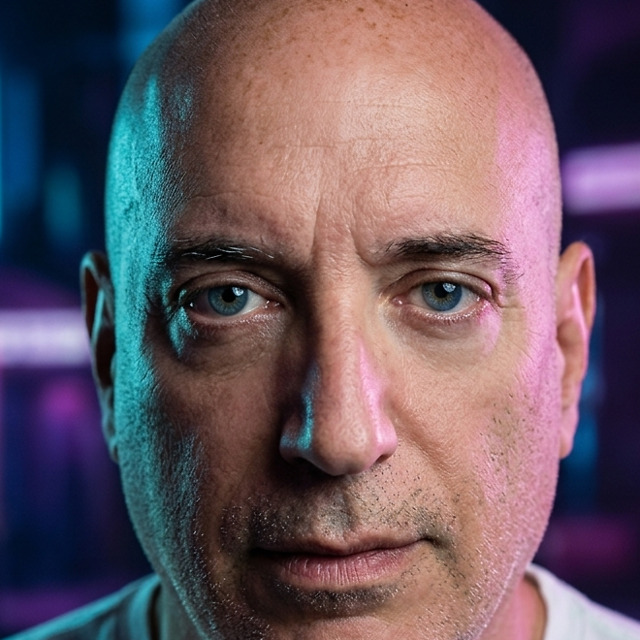
Jack Widman, PhD
Jack founded Sheaf on a conviction and a habit of mind. The conviction: you cannot take an AI's answer on trust. You have to be able to measure whether its reasoning holds together, and that is a question mathematics can answer. The habit: he is drawn to the places where deep, abstract mathematics turns out to be exactly the tool a practical problem needs. Sheaf Labs is where the two meet: a mathematics lab with products, with its first check built on the branch of mathematics he has spent his career in. He holds a PhD in mathematics (topology) and has spent many years building software. Today his work is Sheaf Labs. Alongside it, he stays active in research as an affiliated researcher in the foundations of computer science at Ben-Gurion University.
Phil Grady
Phil has spent his career doing the hard part of what Sheaf Labs now faces: turning a new, rigorous measure into a market. He is a venture builder who has taken businesses from a blank page to category leadership and exit, most notably Castlight Financial, which he founded and grew into one of the UK's leading affordability fintechs. What he built there is close to Sheaf's task: a new market, made by combining open-banking data with credit information into a score the industry did not have, and then the patient work of getting the institutions that decide what is trusted to accept it. Castlight was founded on making a safer financial world. Sheaf Labs carries that idea into agentic AI. Today his work is Sheaf Labs. Alongside it he advises and operates across a portfolio of growth-stage companies.

Nassar Al‑Nassar, PhD
Nassar opens the Gulf for Sheaf Labs. He is a Gulf-focused advisor and deal facilitator who helps international technology companies build institutional relationships in the Middle East. His work sits where GCC sovereign capital, government relationships and inbound technology and investment meet. As founder of Cyndiqate Ltd. he has built a long-standing practice at the GCC-Europe interface, facilitating engagements with sovereign wealth funds, royal family offices and government entities across Saudi Arabia, Qatar, Kuwait and the UAE. His work spans the full arc of market entry: identifying the right institutional counterpart, framing a proposition in terms a sovereign or ministry can act on, structuring the commercial and partnership terms, and navigating the procurement, regulatory and public-private partnership pathways that determine whether a pilot becomes a deployment. Increasingly, that work centres on emerging AI companies seeking a credible first foothold in the region. His perspective is shaped by having sat on several sides of the table. His career spans banking, financial-sector advisory and academic lecturing, giving him both the transactional discipline of a practitioner and the analytical depth of a scholar. He holds a PhD in Global Political Economy from the University of East Anglia, where his research examined the forces that shape capital flows and state economic strategy, the same forces that govern how Gulf institutions allocate, partner and build today. A Kuwaiti national based in the UK, he works across English and Arabic and has a strong understanding of how institutions in the region operate.
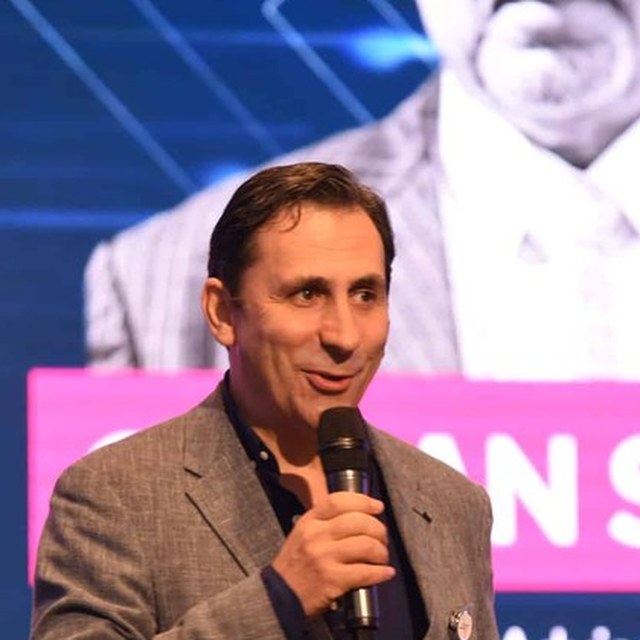
Dinis Guarda
Dinis is one of the most widely followed voices in AI, fintech and blockchain, and he built the platforms that carry those conversations. He founded the ztudium group in London in 2011 and grew it into a technology and media company with offices across Europe, the Middle East and Asia. Its platforms, among them citiesabc, businessabc and intelligenthq, reach over ten million people a month, and Thinkers360 names ztudium one of the fifty leading thought-leadership companies on AI for 2025. He is the author of 4IR: AI, Blockchain, Fintech, IoT: Reinventing a Nation, and his interview series has run for more than 200 episodes to an audience of over two million. He has advised Malaysia on its digital economy, Saudi Arabia on smart cities and Dubai on blockchain strategy, and has worked with the UN, UNESCO, Mastercard and Barclays. At Sheaf Labs he advises on strategy, partnerships and reach, and opens doors to the banks, governments and institutions that decide what is trusted.
Put Sheaf on your line.
Get SheafOr bring us your hardest problem and we will build it on OpenShell with Sheaf signalling.